| Year |
Showa |
Transition |
| 1946 |
21 |
Yoshikawa Metal Co., Ltd. established and commences operations. Business started with Nippon Stainless Steel Kozai Co., Ltd. |
| 1948 |
23 |
Yoshikawa Metal Co., Ltd. establishes a branch in Tokyo, and the Plant Department is newly established. |
| 1952 |
27 |
The Factory Department splits away from Yoshikawa Metal Co., Ltd, and the Yoshikawa Factory (currently known as the Yoshikawa Corp. #1 Plant) is newly established. |
| 1953 |
28 |
Business started with the Nippon Metal Industry Corporation. |
| 1954 |
29 |
Business started with the Nisshin Steel Co., Ltd. (formerly known as Japan Steel.) |
| 1956 |
31 |
Business started with the Nippon Steel Corporation (formerly known as the Yawata Steel Corporation.) |
| 1958 |
33 |
Founding president, Yukimatsu Yoshikawa, heads to America to protest against restrictions on the import of metal kitchenware. |
| 1959 |
34 |
Building constructed in Hatchobori, Tokyo. |
| 1962 |
37 |
The Yoshikawa Factory is completed (currently known as the Yoshikawa Corp. #2 Plant) and an overall administrative system is established. |
| 1964 |
39 |
The Yoshikawa Sales Co., Ltd. (currently known as the Yoshikawa Corp. Head Office) is newly established. |
| 1967 |
42 |
The Yoshikawa Factory's Yoshida Plant is completed (later known as Yoshikawa Metalware Co., Ltd.) Starts operations as an exclusive kitchenware manufactory.
President Sessho Yoshikawa is recognized for his contribution to local industry, and awarded the Medal with Blue Ribbon. |
| 1971 |
46 |
Yoshikawa Metalware Co., Ltd. (currently known as the Yoshikawa Corp. #3 Plant) is newly established. |
| 1973 |
48 |
Yoshikawa Corporation moves to a new location. A large warehouse is constructed. |
| 1975 |
50 |
Development of metal-core cladding with explosion-bonding carried out together with Asahi Kasei and Japan Steel Works Ltd. is successful. Business in Yoshikawa metals is started. The Yoshikawa Factory commences development of pots that use cladding at the same time. |
| 1976 |
51 |
Prima Inc. is newly established. |
| 1978 |
53 |
President Yukimatsu Yoshikawa is awarded Order of the Rising Sun with Gold and Silver Rays in recognition of his many years of service. |
| 1979 |
54 |
Yoshikawa Corp. markets the first pots made from metal-core cladding under the name of the Cook Pal Collection. |
| 1980 |
55 |
Yoshikawa Corp. receives the Good Design Award for its Cook Pal Collection. |
| 1981 |
56 |
Yoshikawa Corp. builds an extension to its #2 Plant. |
| 1982 |
57 |
President Yukimatsu Yoshikawa passes away suddenly. Yoshiyuki Yoshikawa is appointed president and takes over control of the entire Yoshikawa Group.
Former president Yukimatsu Yoshikawa is posthumously awarded the Order of the Sacred Treasure with Gold Rays and Rosette for his service. |
| 1983 |
58 |
Asahi Kasei and the Japan Steel Works separate and create two sales routes. Yoshikawa Corp. fails to win the right to receive deliveries or sell steel from the Japan Steel Works. |
| 1984 |
59 |
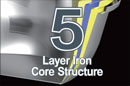
Sumitomo Metal Industries and Yoshikawa Corp. develop a metal-core five-layer structure that uses nickel foil in a joint development project. All sales rights are awarded to Yoshikawa Corp.
Material used in the Cook Pall Collection is changed to the metal-core five-layer structure. |
| 1985 |
60 |
Prima Inc. moves to the Yoshikawa Building in Tokyo's Hatchobori. |
| 1989 |
Heisei |
| 1991 |
3 |
The Yoshikawa Factory, the Yoshikawa Metalware Co., Ltd. and the Yoshikawa Sales Co., Ltd. amalgamated into the Yoshikawa Corporation. |
| 1996 |
8 |
Yoshikawa Corp. develops and commences the sale of the Power Cook Series that uses aluminum cladding manufactured with NAR-160 developed by Sumitomo Metal Industries. This series receives the Good Design Award in October of the same year. |
| 1998 |
10 |
Yoshikawa Corporation's Tsubame administration department moves to Yahiko as the company's head office. |
| 1999 |
11 |
Yoshikawa Corporation's #1 Plant, #2 Plant and #3 Plant acquire the ISO9001 certification. |
| 2001 |
13 |
Yoshikawa Corporation's head office acquires the ISO9001 certification.
Yoshikawa Corporation's ISO9001 certification is backdated to the year 2000. |
| 2003 |
15 |
Yoshikawa Metalworks Co., Ltd. is awarded the ISO9001 certification. |
| 2004 |
16 |
Yoshikawa Corp. markets the Cook Pal Prime series that uses metal-core five-layer structure material. This series receives the Good Design Award and the Long Life Design Award in October of the same year. |
| 2006 |
18 |
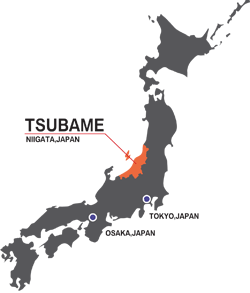
The towns of Yoshida and Bunsui are merged and become the City of Tsubame.
Tsutomu Yoshikawa assumes office as president of the company taking the leadership of Yoshikawa Group.
Yoshiyuki Yoshikawa, the former President, receives the Order of the Rising Sun in recognition of his lifetime achievement.
Yoshikawa Shisetsu Co., Ltd. and Asahi Kogyo Ltd. are integrated to Yoshikawa Corporation.
|
| 2007 |
19 |
President Tsutomu Yoshikawa develops and announces the Yoshikawa Group Business Development Plan for 2007. |
| 2008 |
20 |
Yoshikawa Tokyo Branch, Prima Inc., is relocated to Ryogoku, Sumida-ku in Tokyo.
Yoshikawa Corporation launches the transition to a new regime establishing the Lifestyle Business Department and Implementation Department.
Yoshikawa Corporation and Prima Inc. are merged.
President Tsutomu Yoshikawa develops and announces the Yoshikawa Group Business Development Plan for 2008.
Tokyo Branch and Niigata Sales Office of Yoshikawa Metal Co., Ltd. acquire ISO9001:2000 certification.
Tokyo Branch and Osaka Sales Office of Yoshikawa Corporation acquire ISO9001:2000 certification.
Yoshikawa Corporation is appointed by Japan Institute of Workers’ Evolution as a company which promotes to improve the workplace environment.
Cut Well Co., Ltd. acquires ISO9001:2000 certification.
|
| 2009 |
21 |
Yoshikawa Metal Co., Ltd. acquires ISO14001:2004 certification.
Yoshikawa Corporation acquires ISO14001:2004 certification.
|
| 2010 |
22 |
Plant One and Plant Three of Yoshikawa Corporation are integrated and renamed the Daiichi Production Division of the Implementation Department.
Plant Two of Yoshikawa Corporation is renamed the Daini Production Division of the Implementation Department.
Yoshikawa Corporation COOK-PAL PRIME receives a Home Style Award Best Look in the trade fair Interior Lifestyle China 2010. President Tsutomu Yoshikawa makes a speech at the awards ceremony.
|
| 2011 |
23 |
Yoshikawa Corporation COOK-PAL REN receives a Best Green Style Award in the trade fair Interior Lifestyle China 2011 and also receives a Loyalty Award.
|